Build semantic search in an afternoon? Yep 🤯
Semantic search used to be a major feat of engineering. This weekend I built one in 2 hours of tinkering with the OpenAI API 🤯
Check this out:
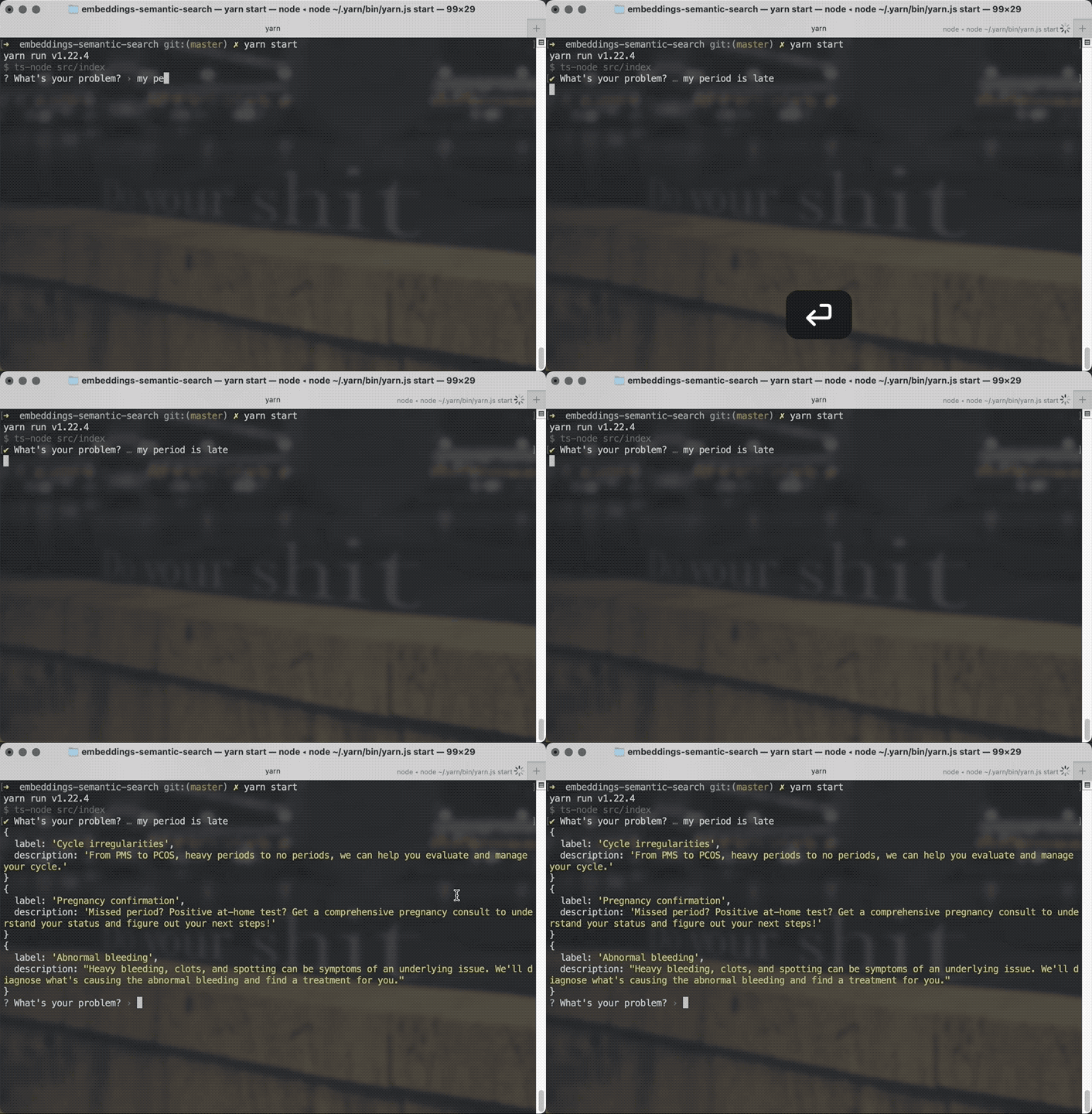
You say "my period is late" and the search is smart enough to recommend Cycle Irregularities and Pregnancy Confirmation as top results. If you say there's a duck stuck in your throat, the search can figure that out too.
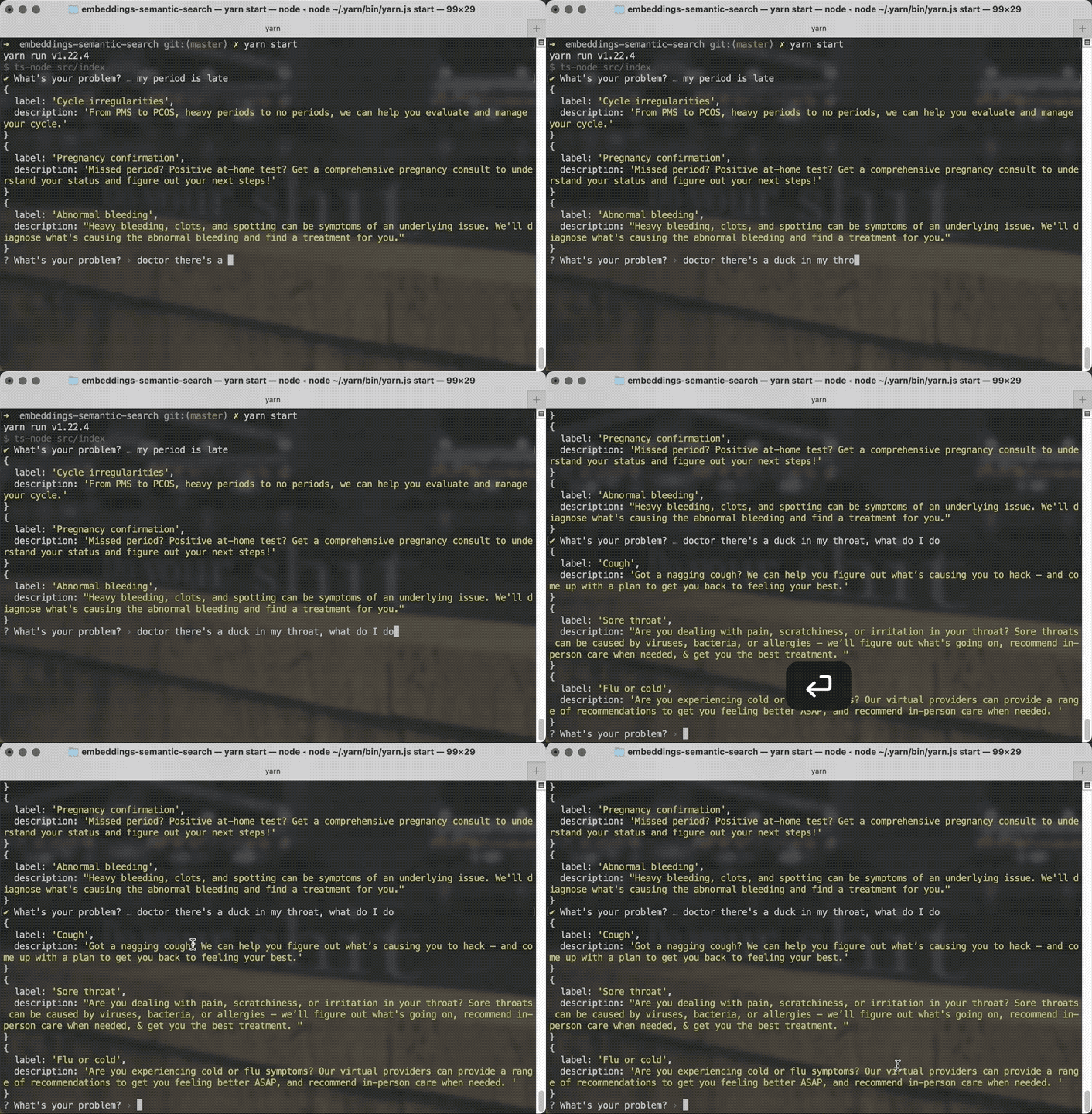
It blows me away that a schmuck like me can build this in 2 hours because we live in the future. When I last looked at semantic search in the early 2010's I couldn't even get past the setup instructions for Solr, a natural language processing server, and Lucene, the library it's built on.
Here's how it works:
- Compute embedding vectors for your data
- Compute embedding vector for your query
- Sort vectors by similarity
Semantic search with full support for synonyms, metaphors, typos, and similes falls out thanks to the vast background info encoded in the large language model, LLM.
Compute embedding vectors for your data
Before you can search, you need embeddings for the documents you want to search through. I put mine in a CSV.
The code below reads a 2-column CSV – label and description – and outputs a 3-column CSV with an embedding column. Using the csv library to parse and stringify CSV data.
async function addEmbeddingsToCSV() {
  const columns = ["label", "description", "embedding"]

  const readStream = fs
    .createReadStream("./data/input.csv")
    .pipe(csv.parse({ from_line: 2 }))

  const writeStream = fs.createWriteStream("./data/input_with_embeddings.csv")
  const stringifier = csv.stringify({ header: true, columns })

  for await (const row of readStream) {
    const [label, description] = row
    const embedding = await getEmbedding(
      `Title: ${label}; Content: ${description}`
    )

    console.log(label)

    stringifier.write([label, description, embedding])
  }

  stringifier.pipe(writeStream)

  console.log("done")
}
The cookbook made it look like encoding your input as Title: ..; Content: .. was important. Probably because GPT was trained on articles from the web.
The getEmbedding function at the core of our code makes an API request to OpenAPI:
async function getEmbedding(input: string) {
  const embedding = await openai.createEmbedding({
    model: "text-embedding-ada-002",
    input,
  })

  return embedding.data.data[0].embedding
}
Embeddings won't change in the future so it's best to pre-compute this separately and save the vectors. You'll want to use a vector database for a production app. I've heard the pgvector plugin for Postgres works great.
Compute embedding vector for your query
Getting a vector for your query is more of the same:
const { search } = await prompts({
  type: "text",
  name: "search",
  message: "What's your problem?",
})
const needle = await getEmbedding(search)
Get search string from user, compute the embedding.
Sort vectors by similarity
This is where the search happens. You're looking for "How far away from the input data is the user's query?"
for (const item of haystack) {
  item.similarity = cosineSimilarity(needle, item.embedding)
}

haystack.sort((a, b) => b.similarity - a.similarity)
Compute vector cosine similarities and sort the haystack. The top few matches are your search results.
I used the compute-cosine-similarity JavaScript library. For production use you'd want to let your vector database handle this part.
What is an embedding vector
I don't know. My understanding is that it's a vector that "embeds" your string in the LLM's vast N-dimensional understanding of training data.
Like an index that says "here it is in the brain".
The part I don't get is how come embeddings can have 1536 dimensions when the LLM itself has billions of parameters. Means the embedding can't be just a list of activated neurons 🤔
Cheers,
~Swizec
PS: I followed OpenAI's wonderful cookbook example to build this