Go full-stack in 5min with your first cloud function
Let's get tactical, how do you build a JavaScript function that runs in the cloud serverlessly?
As we said earlier, the modern backend is a JavaScript function. You can be a full-stack engineer, no fancy sysadmin skills or kubernetes monstrosities requires ✌️
There's a few ways to start:
- Vercel cloud functions
- Netlify cloud functions
- AWS Lambda
Vercel and Netlify are quick and easy, AWS Lambda gives you more control as you grow. All 3 let you take a function like this:
export const handler = async () => {
  return {
    statusCode: 200,
    body: "Hello 👋",
  }
}
And turn it into a publicly accessible URL that says hi.

Vercel
Vercel is among the youngest serverless and JAMStack providers. One of my favs for hosting websites.
Take a project built in a popular web framework like Create-react-app, Gatsby, Vue, Next, Nuxt, et al, run vercel and it's live on a URL. I'll never get over how easy they've made it 😍
Hello
To make a cloud function, you use the /api directory.
;/api/ehllo.js

module.exports = (req, res) => {
  // .status sets the status code
  // .send writes the response
  return res.status(200).send("Hello 👋")
}
Vercel uses Express-like functions. Express is a popular backend framework in the JavaScript world.
req is the request object. You'll find params in here, session info, and anything you add in your chain of functions (called middleware).
res is the response. You use it to set status codes, write the body, add headers ...
Deploy, and you get a URL.
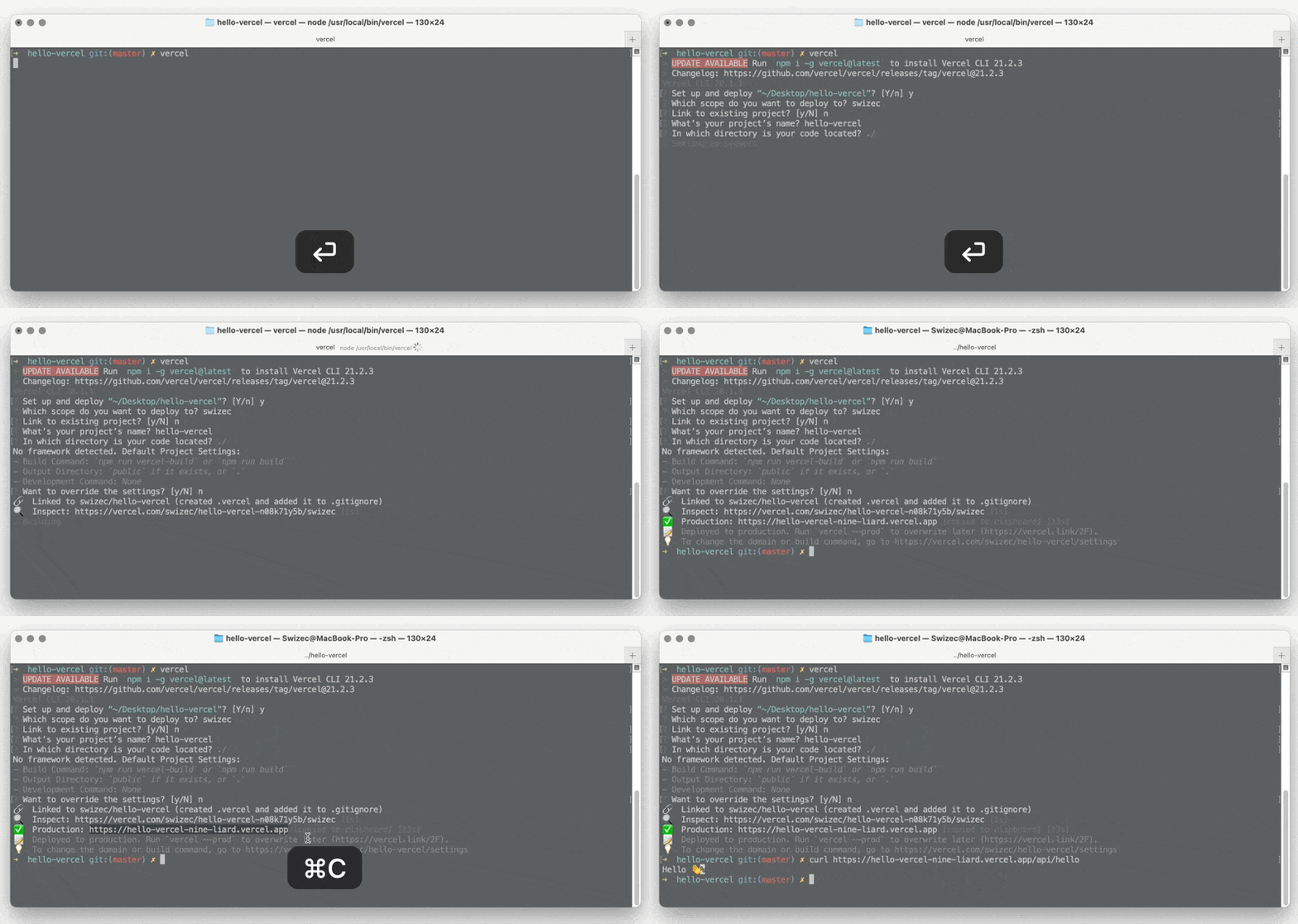
Append /api/<your function> to the URL to call your cloud function. Wakes a server on demand, runs your tiny code, returns the result 👌
Use Vercel?
Vercel's cloud functions are fantastic for tiny features. When you need to run secure code on the server, make a calculation that would freeze the browser, or call a 3rd party API or database.
Primary use-case is for Next.js server-side rendering and generation. When you call getServerSideProps, it's running on one of these cloud functions for you.
Access to and from the full serverless ecosystem is tricky and discouraged.
Netlify
Netlify invented the word JAMStack and they offer Netlify Functions as their cloud function approach.
Like Vercel, they're great at hosting any project built in a popular web framework. The difference is they're UI first. Not my jam, personally. The GitHub integration works great 👌
Hai
To make a cloud function, you add a file to to the /netlify/functions/ directory.
exports.handler = async () => {
  return {
    statusCode: 200,
    body: "Hello 👋",
  }
}
Netlify acts as a thin wrapper on AWS Lambda and uses the same syntax. Huzzah 🙌
An optional event argument gives you access to params, headers, and other info. You return the response as a JavaScript object.
There are no middlewares.
Deploy, and you get a URL.
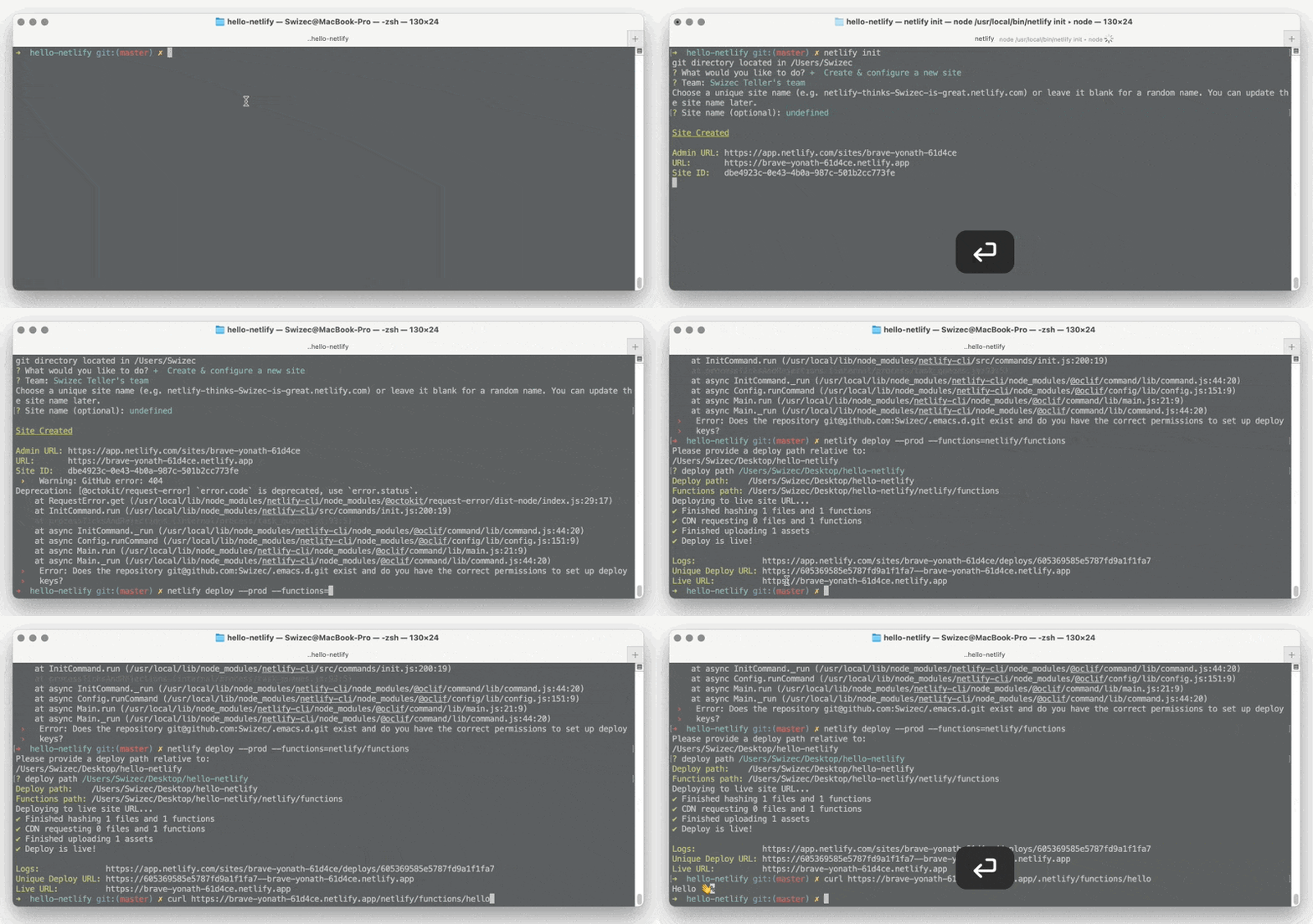
Append /.netlify/functions/<your function> to the URL to call your cloud function. Wakes a server on demand, runs your tiny code, returns the result 👌
Use Netlify?
Like Vercel, Netlify cloud functions are fantastic for tiny features. Do something secret, hook up a 3rd party API, ...
A nice benefit is that Netlify supports event-driven functions that they trigger for you, and there's periodic background functions.
But that URL looks silly and access to and from the full serverless ecosystem remains hard.
AWS Lambda
AWS Lambda is the original serverless provider. Often used as a synonym for serverless as a whole.
And as you can imagine, AWS gives zero shits about making this easy for anyone. They're a Java shop targeting Java folk aiming at grizzled backend veterans.
Ask anyone if they enjoy using AWS's native UI tools 😛
Hint: why do you think there's so many alternatives running on AWS?
I like to use the Serverless Framework to deal with AWS. Great balance between making common features easy and powerful features possible. You can drop down to AWS's native config any time ✌️
Heard great things about arc.codes, haven't tried yet.
Aloha
You take the same JavaScript function from Netlify
// handler.js
exports.hello = async () => {
  return {
    statusCode: 200,
    body: `Hello 👋`,
  }
}
And add a configuration file:
# serverless.yml

service: hello-world
provider:
  name: aws
  runtime: nodejs12.x
  stage: dev

functions:
  hello:
    handler: ./handler.hello
    events:
      - http:
          path: hello
          method: GET
          cors: true
The provider section defines where and how your function runs. Serverless Framework supports more than AWS.
You can use this area for shared config between functions.
The functions section defines your AWS Lambda functions. Each comes with a name, a function to call, and the event (or many) that trigger it.
The config above creates an API Gateway that listens on a /dev/hello path.
Watch
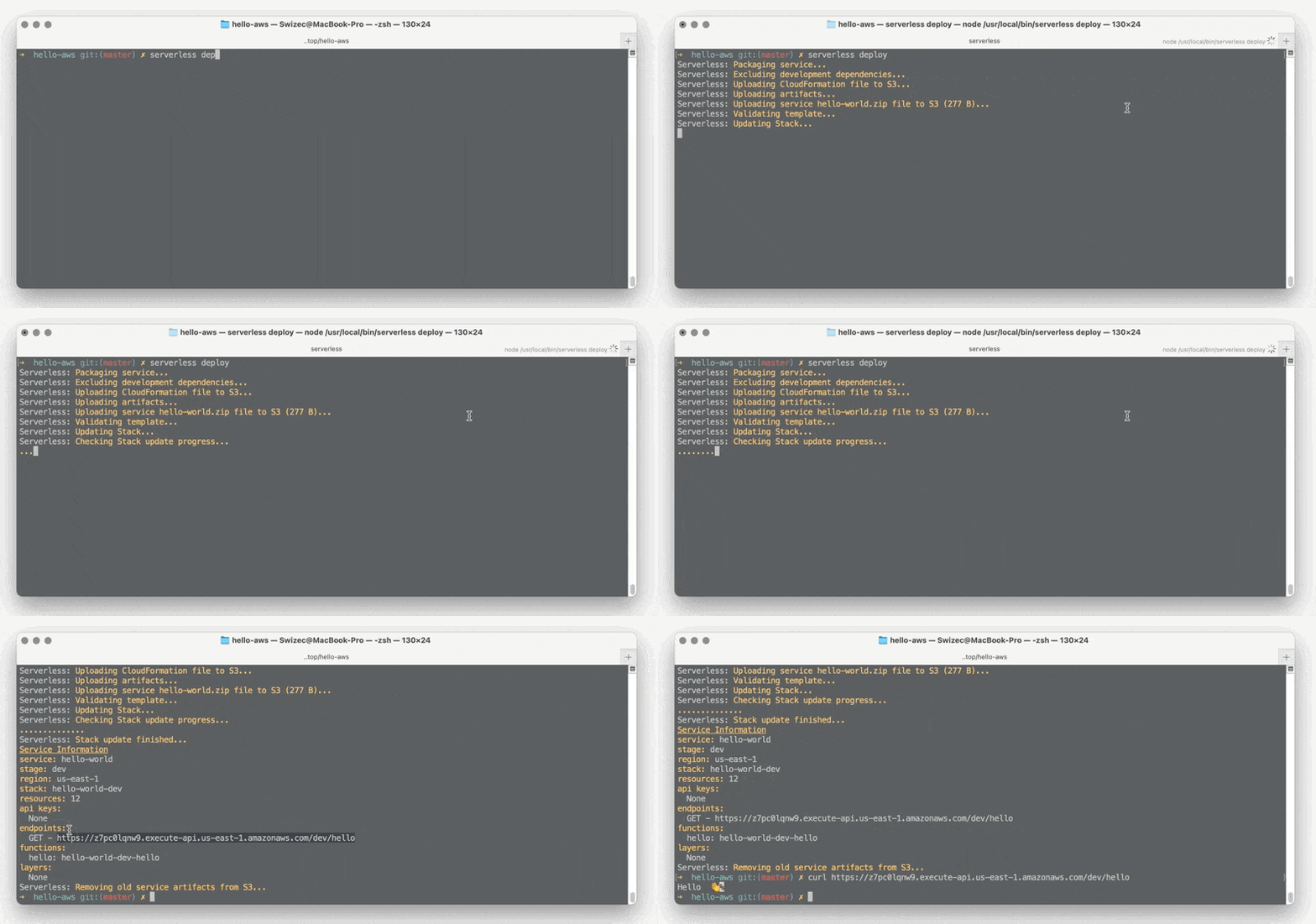
Take the URL, call your cloud function. Wakes a server on demand, runs your tiny code, returns the result 👌
Use AWS Lambda
It's more work than Vercel or Netlify and you'll never outgrow it. Okay, you might turn into a Fortune100 company one day ...
If you're engineering at a Fortune100, you don't need any of this. There's a department for that 🙃
With AWS you can do everything. The whole ecosystem is easy to access and configurable through serverless.yml.
You pick this if the backend is at all important to your project my friend.
What would you pick? hit reply
Cheers,
~Swizec
PS: don't forget, live Serverless Q&A and new book celebration Monday morning; come say Hi