Using scopes for elegant JAMStack permissions
About a month ago I wrote about Adding granular role-based access to your JAMStack app. That worked okay.
Use something like useAuth to authenticate users, add some roles, then check those roles in your app. Often at the main <Layout> level.
You get an app that sometimes asks for additional permissions.
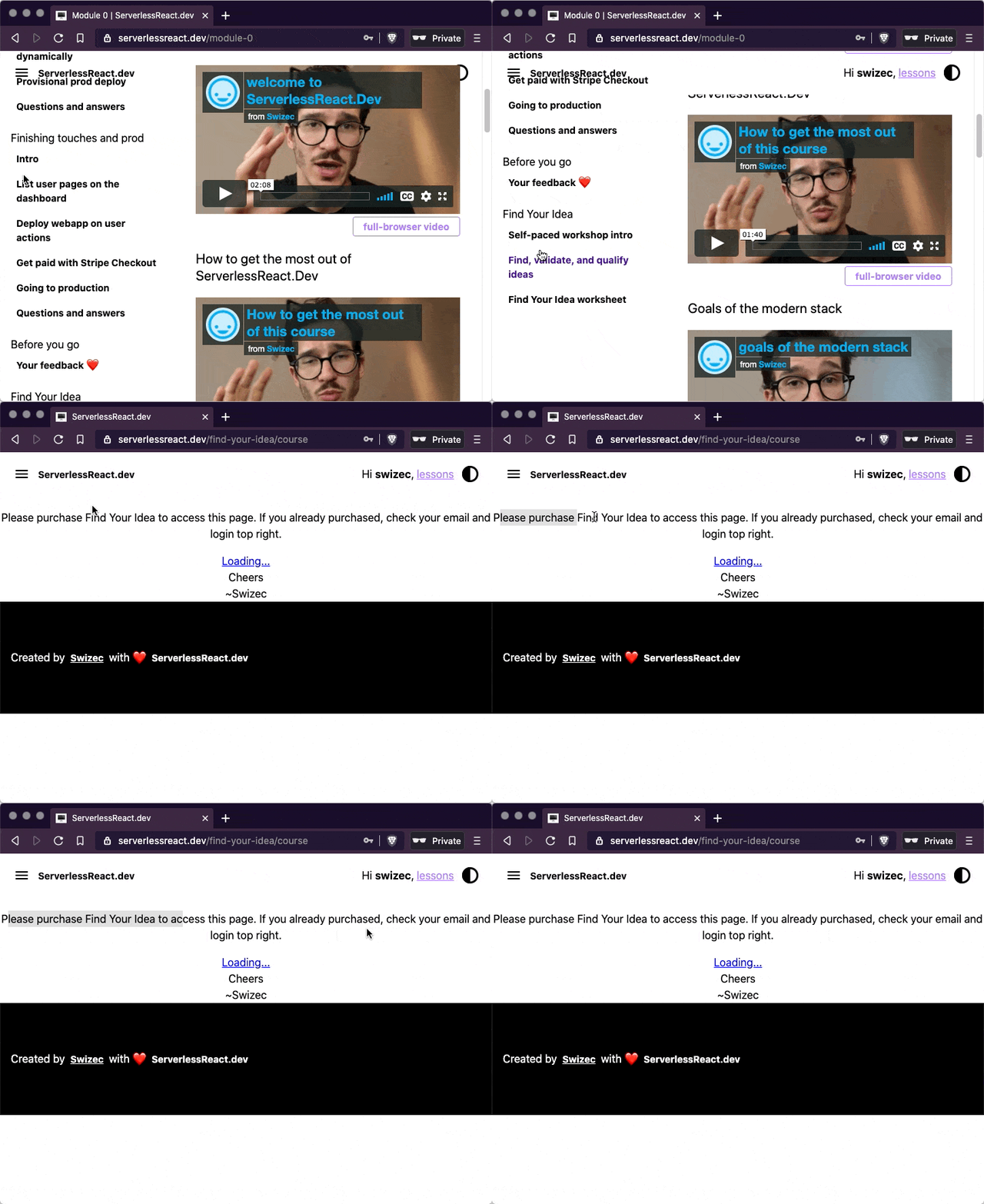
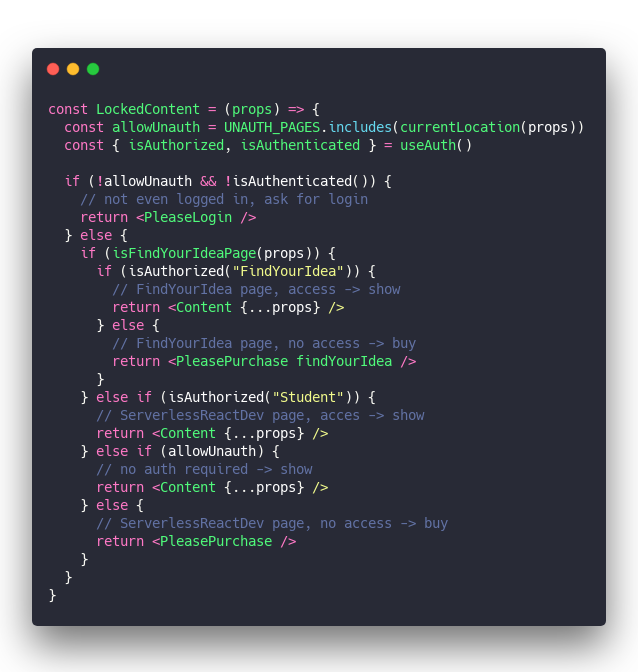
But this approach had 2 warts:
- Lots of people mentioned that scopes in practice scale better than roles
- You needed this gnarly code somewhere in your app

Scopes bring more elegance
Wanted to use this approach for my React for Dataviz course, which has 3 tiers on top of free stuff, and my head began to spin. No way this was gonna work. 😅
I set out to find a better way:
And I found one! Scopes.
A scope is no different than a role – a string attached to the user. The semantics of scopes are different though.
Instead of answering "Who is this user?" a scope answers "What can this user do?". Small difference, big impact.
And when you move permission checking to the router-level, the result is quite elegant. I think.
Haven't tried it with NextJS, with Gatsby you'd do something like this 👇
1. wrap the root of your tree
Permission-checking happens as high up in your component tree as possible. For Gatsby that's the wrapPageElement method. I use the same method for gatsby-ssr and gatsby-browser.
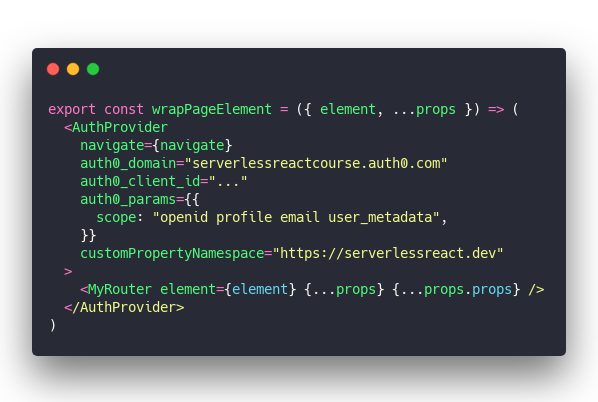
Wrap everything in useAuth's <AuthProvider> then render the <MyRouter> component making sure to pass the element and all props.
2. a simple router
Next you need a router to map paths to components. Gatsby comes with reach/router built-in so that seems like a good choice.
Unfortunately I couldn't get it to work reliably. Kept matching incorrect routes. The integration isn't as tight as I hoped.
But that's okay. Turns out building your own basic router isn't so hard.
Here's mine:
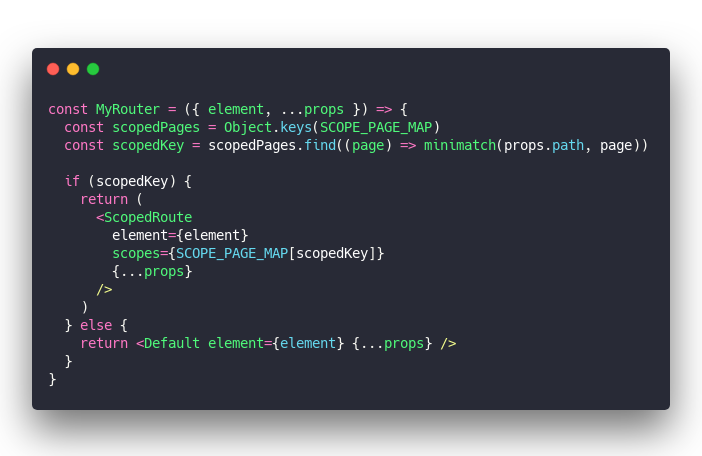
We use a SCOPE_PAGE_MAP that maps glob'd locations to their scopes. Use the minimatch library to find a matching path.
If path is found, render <ScopedRoute>, otherwise render <Default>.
The SCOPE_PAGE_MAP is a long list like this:
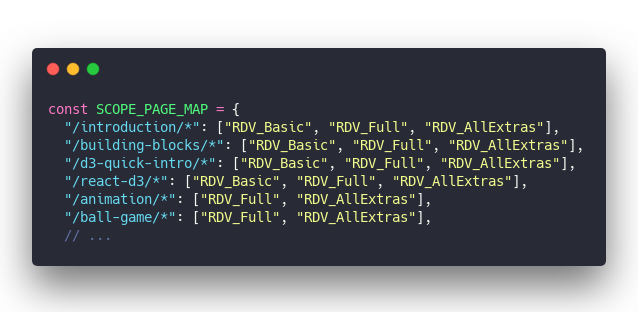
This part is tedious. Thinking of ways to move this info into MDX frontmatter that you can query with GraphQL.
Perhaps an idea for a Gatsby plugin 🤔
3. Default route
Now that you're mapping routes to components, you need those components :)
The <Default> component/route can be simple:
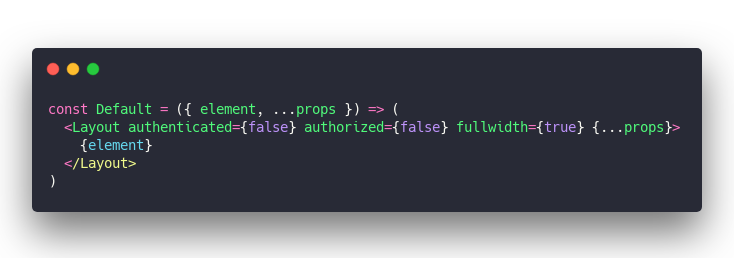
Tells the layout that you're not authenticated, not authorized, and in my case to render the page fullwidth without the sidebar.
The <Layout> could check for this stuff with useAuth but it's cleaner to just tell it. "Hey, show extra buttons for authorized users"
4. scoped route
<ScopedRoute> is the bread and butter of this approach. And unlike my previous attempt, it's not gnarly at all ✌️
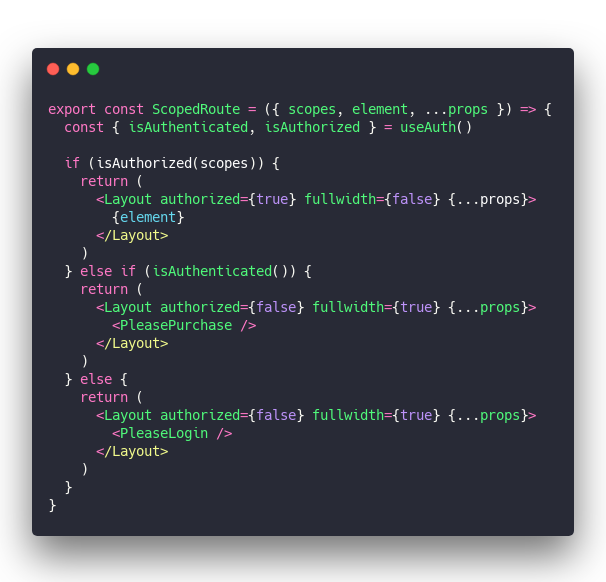
Hook into user state with useAuth and render different pages when they're authenticated, authorized, or unknown.
Flags in <Layout> change some UI features and the child element being {element} – the MDX content – or purchase/login specifies the core of the page.
And that's how you get elegant scope-based permissions in your JAMStack app ✌️
Happy Monday
Cheers, ~Swizec
PS: scopes get into your users the same way roles do. You add them through the Auth0 API or UI and use a bit of Auth0 JavaScript to inject it into user properties on every request.