What I learned from Accelerate
Accelerate is the empirical research behind books such as The Phoenix/Unicorn Project and (parts of) Software Engineering at Google. I loved it.
Accelerate describes 4 years of research into "What makes one technology organization more successful than another?".
It's not a framework, it's not the code they write, it's people and processes. The authors find that across thousands of teams and companies, iteration speed is the strongest predictor of commercial success. The faster you can bring products/features to market and respond to user feedback, the more successful you'll bee.
That is the thesis I've hinged my Scaling Fast book on so this is perfect timing 🤘
The book is well-worth a read. Short and to the point, lots of good advice. First part is takeaways. Second part is how to do research like this. Third part is 1 chapter on how to put this into practice – feels like a trailer for another book.
Here are the key takeaways:
- Your tech stack has zero predictive power of success
- Product delivery cycle times are key
- The "Iron Triangle" is wrong – faster delivery means fewer bugs and cheaper software (less rework, fewer missed requirements, less time)
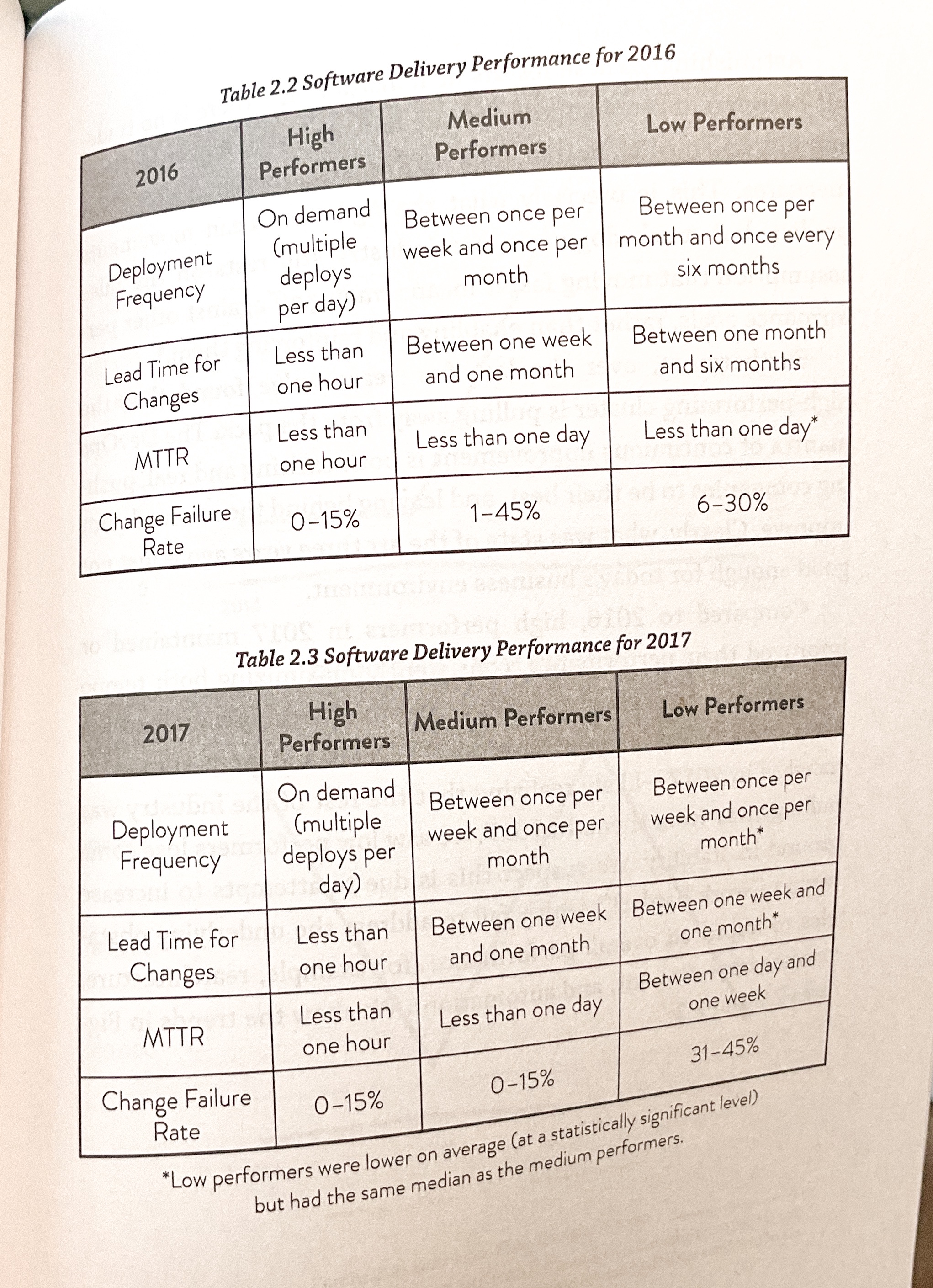
These are DORA metrics, you should keep track of these if you aren't.
- Use continuous delivery – this has some pre-reqs (automated deploys, enough tests, ...) and directly leads to better DORA metrics
- Build a learning organization – use mistakes to improve the system, not punish individuals
- Build a generative collaborative culture
- Faster delivery with less bureaucracy makes employees happy and reduces burnout
- Use lean development practices – reduce work-in-progress, get feedback from production, make work visible
- Change approvals should be quick and easy
- Work in small batches
- DO NOT copy paste processes from other teams and companies. Focus on the outcomes and iterate your way to a process that works for your team and situation.
- Do surveys of what the day-to-day work feels like. Then fix the problems
Cheers,
~Swizec