What you need to make an agent
I've been digging into agents for internal tooling and processes. Looking for how to scale without drowning in manual work. Here's what I found.
The best paper you should read is From Language to Action: A Review of Large Language Models as Autonomous Agents and Tool Users, here linked with my notes. As always I recommend you Just Read The Paper, but it's 38 pages and most of you won't.
Agent tl;dr
Here's what you need:
- RAG
- tool calling
- memory
- feedback loop
And that's an agent. The big labs have made these easy to build. Anthropic's Python SDK packs it all into 1 function call:
runner = client.beta.messages.tool_runner(
    model="claude-sonnet-4-6",
    max_tokens=4096,
    system=SYSTEM_PROMPT,
    tools=AGENT_TOOLS,
    messages=[{"role": "user", "content": query}],
)
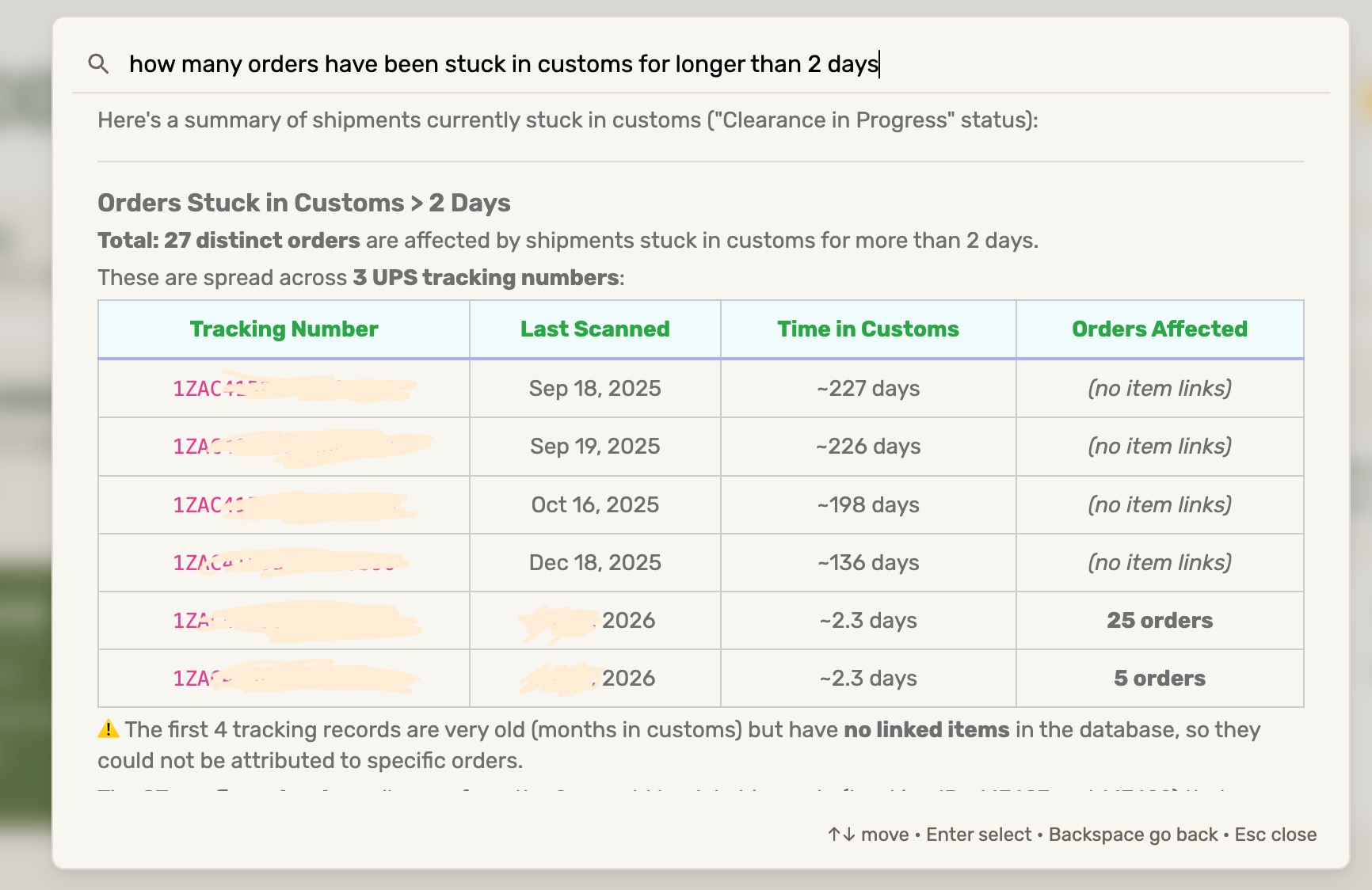
I've seen this run for 3 minutes and call a bunch of tools in a loop before returning the answer. It's pretty neat.
Haven't tried streaming the thought process yet so it makes for a boring user experience. You sit there and look at the loading spinner, wonder if something broke, then BOOM – the answer.
Great for background work though.
RAG
Retrieval Augmented Generation is at the core of all this. Every useful thing you've seen built with AI in the last ~3 years has been based on RAG.
You take an LLM with knowledge embedded in its neural network (training, post-training, fine-tuning) and you ask it a question. It will mostly hallucinate or give outdated answers from its training set.
But if you include relevant new information in your prompt, the LLM will ground its answer in your data. This works very well.
Now the hard part is retrieval. How do you find relevant info to inject into your prompt?
Tool calling
Tool calling is the best retrieval method. It lets you give the LLM a list of tools (via RAG) with access to hard external data. Real-time current APIs, facts and figures, web search, ...
Tool-calling LLMs can reflect on their thinking process and go "Oh I'm finding orders stuck in customs for 2 days. That sounds like a database query, do we have relevant models?".
Then it calls the list_all_models tool, injects that back into the prompt (RAG), and asks itself if there's anything useful. It finds tracking labels with UPS data and how orders are connected. Great.
From there it can write a SQL query, call another tool to execute that query, and inject the results back into its context. From there it can summarize into the answer.
It's RAG all the way down.
Memory
With RAG and tool calling, your prompt can get way too big. LLMs have trouble with paying attention in long meetings. (me too)
You now need memory management techniques.
A popular method is to summarize sessions into highlights. Think of it as taking notes during a meeting. You don't transcribe everything that was said, you write down the highlights.
Later you can read those highlights and understand the gist. You'd never get anything done if you had to re-read every meeting transcript from the dawn of eternity before making a decision.
LLMs can do something similar. During a long session, you can compact your prompt by writing summaries of key decisions and findings.
To build agents with memory-over-time, you could then store those summaries somewhere retrievable. Like your company knowledge database. Now other agents can read it too! Wow
The frontier right now is building these memory systems personalized to individual users. Wouldn't it be cool if Bob The User could reference yesterday's conversation?
Feedback loop
We mentioned agents run in a loop. You're doing plan, tool, RAG in a loop. At each step the agent asks "Did I write the answer yet?". If not, keep going.
The magic is to give these agents feedback loops. Potentially with human-in-the-loop. How do you best give the agent feedback on what it's doing?
You could have it run tests, simulate a browser and pretend it's a user. You can even use other LLMs to give feedback. Those tool calls could be another LLM 💡
I think the human operator using the Just Talk To It method is a great option. My dream is an agent that can learn from feedback and get better over time.
Cheers,
~Swizec